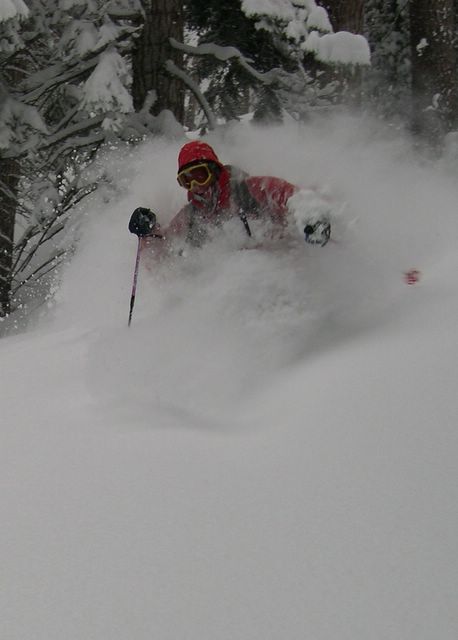
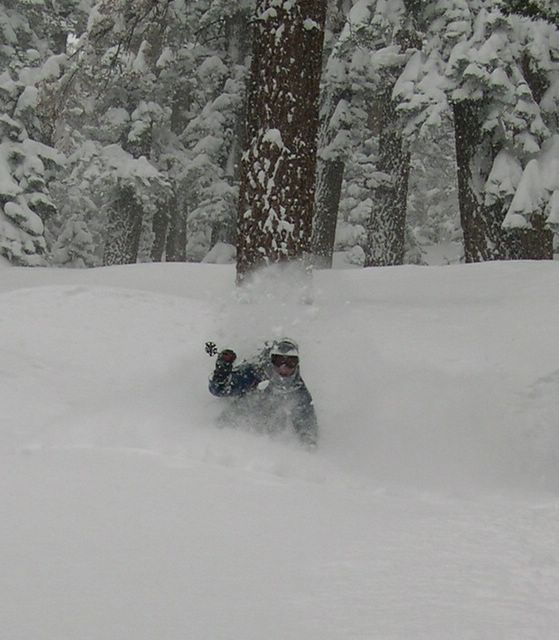
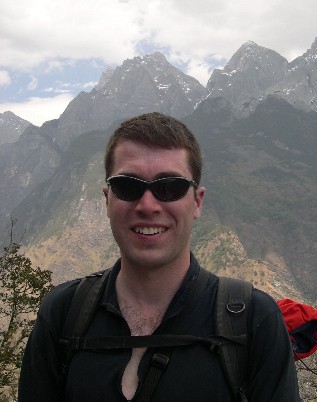
Monday, July 31, 2006

Triathlon Update: I love Endorphins

The triathlon training continues to go well with the last 2 weeks being especially good. This is an excerpt from my last update email:

In my last email, I mentioned that I had been having some foot problems. The truth is, I had those foot problems at the same time that my bike broke. So me being the semi-autistic workout fanatic that I am, I did somewhat get out of my workout routine and dropped down to 3 workouts a week for about two weeks. This also coincided with a 2 week period in which I was just in a bad mood. Over the last 2 weeks, I really started ramping up my workouts again and my spirits coincidentally started improving. Then last Wednesday morning as I was riding up a very steep, painful hill going from LaJolla Shores to Torrey Pines, I was hit with a sudden wave of ecstasy at the same time that my legs were telling me they had had enough. So what caused this ecstasy out of pain? I have two competing theories. One, I realized while going up that hill that it was less than 5 months from the theoretical start of ski season. (Yes, I admit that I am a complete ski dork!) Second, I think that I am addicted to the endorphins that go through your body when you're working out. That endorphin rush I got while going up the hill gave me the extra oomph to power me through the last 25 miles and put me in a great mood for the rest of the day. So after I'm done this triathlon, I might have to find another race to train for in order to maintain my sanity.

At this point, I know that I'll be able to finish the race. As I enter the last half of my training, my goal is to do well. I know that I won't win it. But I want to finish in the top 10% of my age group. This weekend, we had a bunch of great workouts. Friday night, we did a 2.5 mile ocean swim at LaJolla shores. In regards to my last update email, I just want to let you know that I was using sarcasm when I said that I was going to lube my black wetsuit with seal oil just to give the swim an added thrill. I'm not that stupid. On Saturday, we did a great workout riding from Lake Hodges to Solana Beach and back. It was a very hill ride and it was hot...damn hot. I'm not sure if it was Africa hot...but it was pretty close. On the way back, the thermometer registered 115F in the sun and a cool 107F in the shade. And as soon as we got off the bikes, we went for a 5 mile run. Luckily I stayed hydrated pretty well. But some of the people who were out there longer got pretty dehydrated and were shivering uncontrollably. Today I did a bit of surfing in the afternoon and then went for a 7 mile run this evening.

Now I'll share a couple of my lessons learned with you:
1) The Energy Gu's are great. When I'm on the bike, I now prefer those over the power/lara/cliff bars. That being said, all gu's are not made the same. Avoid the cliff bar gu's at all costs. They are absolutely the worst! The raspberry gave me flashbacks to the fluoride treatments I used to get at the dentists when I was a kid.
2) It's as important to poor water over your head as it is to drink it. I know what you're thinking. But I never used to do it to. But when it's hot, you can totally feel the difference in your body when you squirt a bunch of cool water into your bike helmet. Even better is to put ice cubes into your hat when you're running. It basically just cools down your body and keeps it from overheating.
3) Don't go cheap when it comes to bike repair. I had to replace my rear derailleur last November. I took it Performance (big box nationwide chain bike shop) to get fixed. They ended up putting a derailleur that was incompatible with my bike. (2 chainring derailleur when I have a triple) So when I got sick of my derailleur and my tri coach said that they had sold me the wrong part, I took it to another big bike shop (bike warehouse) to get fixed. At first they did a great job and they even cleaned up my bike. However after 2 weeks, I noticed that they must not have relubed my chain after they cleaned it off because it was covered in rust. Lesson learned is to take your bike to the small shop that can you better service even it costs a bit more.
4) Hamburgers, wings, fries, and beer are not appropriate to eat before going for a run. If you are going to eat them, 1 1/2 hours is not enough to let them digest before attempting said run. That's what I had for an early dinner tonight after surfing. I felt like I was about to vomit the entire second half of the run. So don't do what I did.

I'd like to thank all of you who have donated an awesome $2925 over the last 2 months. You guys are all awesome. Two weeks ago was our recommittment weekend where I recommitted to raising a minimum of $4,000 by August 18th. As part of that recommittment, I have promised to make up the difference between what I raise and the fundraising minimum. So for those of you who haven't donated, I would really love to have your support.
http://www.active.com/donate/tntsdh/leister If you're already thinking about making a donation, I just ask that you make it before August 15th if at all possible so I can minimize the damage on my credit card.

Tuesday, June 20, 2006

Triathlon Update: Suck it Up!

The last time I wrote, I was complaining about my elbows and I wasn't sure if I was imagining it. The pain seemed to be moving around. It seemed to be moving around between my forearm and my tricep and everywhere in between. Finally, last Wednesday, I had enough. I told myself that I really must be imagining it and decided to go swimming the next day. Although my elbows felt a little tight afterwards, on the whole they were fine. I ended up swimming 1700 yds that day and am now back into the routine. So the lesson learned is, if it feels like your mind is playing tricks on you, it probably is. So just suck it up and deal with it!

On Saturday at our team bike practice, Lisa and Sara, two of my teammates, told us a story of their friend Rita who had recently died from Leukemia. Both of them joined Team in Training shortly after Rita was diagnosed. She was an honored teammate for several seasons and used to cheer on the team during practices. They told us that whenever they feel like they can't climb another hill, swim another lap, or run another mile, they tell themselves to do one more for Rita. I found that pretty motivating and used it get myself to do one more climb up Mt Soledad on Sunday.

My totals for last week were: biking 91 miles, running: 10.5 miles, swimming: 1700 yds.

Moving on to another topic near and dear to me, I'd like to talk about the world cup. The TV coverage this year has been great. The fact that every game is being broadcast this year shows just how far soccer has come in this country. Also surprising has been just how great the turnout has been to watch the games at the local San Diego bars. I never would have guessed that I wouldn't be able to get into a bar to watch a soccer game due to the bar being at max capacity. Like everyone, I was pretty disgusted by the US performance against the Czech Republic. But I've got to give them a big hand for the spirited effort they showed against Italy.

Wednesday, June 14, 2006

Triathlon: Problems with the Elbows While the Legs Keep Going

In the past, I've always liked running and swimming. However, I've frequently had problems with my knees when I've gotten into an intensive running routine. Beginning in my senior year in high school, I've experienced reoccuring tendinitis in my elbows from swimming. These injury problems were the reason I got into biking (almost zero impact). But they were also the reason I decided to give triathlons a try. I figured that if I didn't overtrain in any one sport, I wouldn't experience any of my old injury issues.

As the title alludes to, I've had great luck so far with my knees while my elbows have recently started giving me troubles. Beginning after my swim workout (2500 yards, mostly low intensity) last Tuesday, my right elbow has been bothering me. The weird thing is that the pain is sometimes just forward of the elbow and other times on the back of the elbow by the tricep. Because of this, I'm not sure if there's actually anything wrong or if I'm imagining it. Maybe the pain is there because my mind is focused on my elbow so much that it never really relaxes. I'm going to take a 1.5 weeks off and then start swimming again.

The good news is that my knees haven't had any issues yet. The running is going very well. Last Wednesday, we had a 3 mile time trial that I completed in 19:28.

On the fundraising front, I've raised $850 so far. I'd like to thank Roman Kogan and Nathan Luther for their generous donations. Again, if you'd like to donate, please click here to visit my fundraising page.

Overall, my totals for last week were as follows: swimming: 2500 yards, biking: 95 miles, and running: 11 miles.

Thursday, June 08, 2006

Triathlon: The World According to Gurujan: What do When You Really Have to Go

Back when I was still on submarines, we used to say that one of the marks of a good officer was having a 6 hour bladder. That way you could make it through your watch without getting someone to relieve you for to go to the bathroom.

So as I was sitting on the ground at our triathlon team's running practice, I started laughing when one of the girls on the team asked our coach, Gurujan, what to do when you have to go to the bathroom on the course. Going with my old submarine instincts, I muttered to myself, "You hold it stupid." How wrong I was.

Like the answers to all difficult questions, Gurujan said it depends. First, if there's a port a potty or a gas station along the course, you could stop and use one of those. The positives are that you will have some privacy. The down side is that you lose time by stopping and leaving the course. Also, you need to make sure not to make any forward progress when you reenter the course as that would lead to potential disqualification. Secondly, you could go on the side of the course. Another girl on our team said this is what she did at the Lavaman triathlon. The positives are that you don't lose as much time looking for a real bathroom. The downside is that you can't be easily embarrassed. The girl who did it a Lavaman said that she had zero bushes/trees to hide behind and everyone passing by could see her. Another downside is that nudity is often against the rules at most triathlons. Gurujan told us that it would probably get us kicked out of the race at Pacific Grove as the 70 year old millionaires who live up there wouldn't feel good about seeing us piss in their roses. Finally, the best option according to Gurujan is just to wet yourself. He said that trying to hold it is a definite no-no and the aforementioned options all have too many downsides. Therefore, your best option is to just to go in your wetsuit (preferred as it also provides warmth) or in your shorts while on the bike or running. If you're embarrassed, he recommended camouflaging it by dousing yourself with gatorade. Apparently, wetting oneself is easier said than done. He was very proud of having completed the trifecta at the recent Wildflower Triathlon. I was half expecting that he was going to include this as one of our practical factors for one of our upcoming workouts. Luckily, he left that out.

Monday, June 05, 2006

Triathlon: Surprising Strengths and Weaknesses

I'm now two weeks into training for the triathlon. Apart from my body being very tired, it's been going great! Here are the stats for last week: Running: 8 miles, Biking: 88 miles, Swimming: 4700 yds. Going into the program, I was already in pretty good shape. But this is definitely a ramp up from what I was used to.

Going into the program, I was already averaging 30-60 miles per week on my bike. Although I was doing some running and swimming, it was at most 1x/week. Thus I expected the bike to be my strength. However, this weekend we just completed our last time trial that we'll use to divide people into groups for our organized workouts. What I found was that the bike is actually my weak area. Out of 42 people, I came in 3rd on the run, 4th in the swim, and 7th on the bike.
For our workouts, we've been doing shorter distance, high intensity workouts for our team workouts. The program has us focusing on longer distance, low intensity, base building for our individual workouts. For the base building, we are aiming to do the workouts at 75% max intensity. As our coach said, if you can feel burn in your muscles, you're working to hard. The goal for these workouts is to build up an aerobic base, not to build muscle mass. This was by far the hardest thing to get used. Like most people, I've always tried going as hard as I could in all of my workouts. After a long ride, it just doesn't feel right seeing that I only average 13.5 mph.

The fundraising is off to a good start. I'd like to thank my mother for a very generous donation of $750. I'd also like to thank FedEx/Kinkos for donating copying services for my fundraising letter.

Lastly, this is a good article I recently came across in the San Diego Union Tribune which talks about one girl's fight against leukemia and her association with Team in Training.
http://www.signonsandiego.com/uniontrib/20060602/news_lz1s2herdream.html

Friday, May 26, 2006

Training For a Triathlon


With a successful ski season coming to a close, I decided that I needed to find a new athletic challenge to get me through the summer. So I’ve recently started training for the Triathlon in Pacific Grove, CaliforniaMonterey) on September 9th. (near It's an olympic distance triathlon, composed of a 1 mile swim, 25 mile bike, and a 6 mile run. I’ve told myself in the past that I was going to do a triathlon or a century bike ride. But as many of you know, I’m like the guy in “Rain Man.” Once I get out of my workout routine, everything falls apart. And more than likely, it will be a whole month before I workout again. So I decided to join up with the Leukemia and Lymphoma Society’s Team in Training (TNT) program to train for the triathlon. Not only do I have a whole team to keep me working out, but I get to raise money for a great cause.

The Leukemia and Lymphoma Society is a non-profit health organization dedicated to finding a cure for leukemia, lymphoma, Hodgkin’s disease and myeloma, and improving the quality of life for patients and their families. I've made it my personal goal to raise at least $5000 for the Leukemia & Lymphoma Society and I would love to have your support. Every donation that you make, no matter how small, will help in the search for a cure to blood cancers. 75% of your donation will go directly to research and patient services. If you would like to donate, you can make an online donation by visiting my personal Team in Training webpage: http://www.active.com/donate/tntsdh/leister

Be sure to come back to the blog throughout the summer for updates on my training and fundraising! Thank you for your support.

Tuesday, May 23, 2006

Backcountry Ski Trip Report: TTips weekend at Tobacco Flats

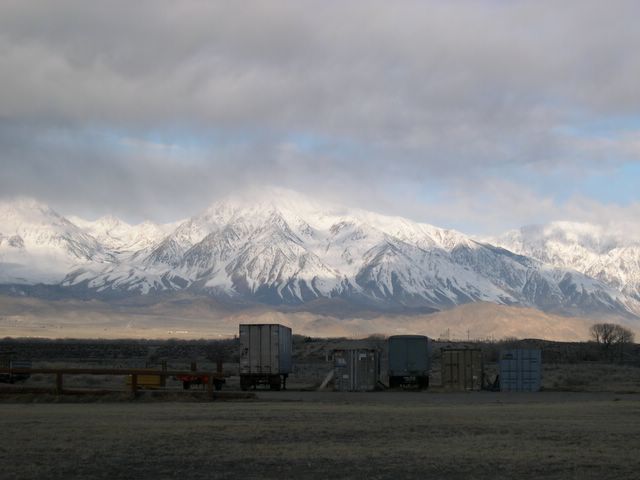
After making skiing my number one priority this winter, my other committments (school, work, family, etc) finally won out and kept me from doing any skiing during the last 5 weeks. So when I found out about the Telemark Tips gathering taking place this past weekend at Tobacco Flats on the East Side of the Sierras, I was all ready to load up my car and make the journey from San Diego.

Truth be told, I was a bit concerned with the weather. As of Thursday, it looked like we were going to be getting some rain on Sunday. The only question was when. But Friday morning, the latest weather report from Howard Scheckter, Mammoth's Local forecaster, said we weren't going to get anything until Sunday afternoon. That gave us the green light.

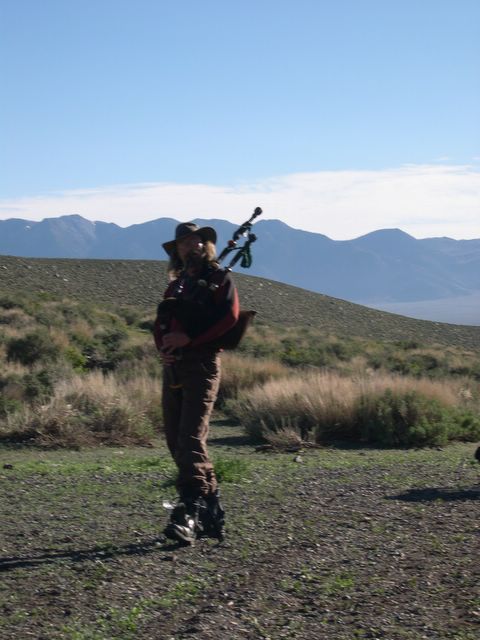
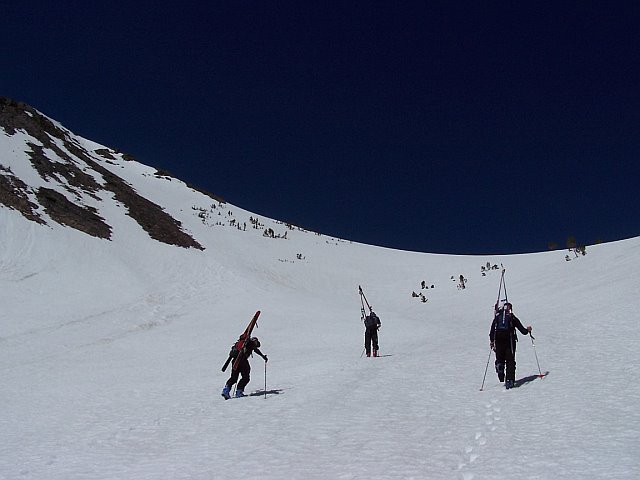
After 6.5 hours in the car, we made it to the Tobacco Flats camp site at 1:30 AM. The directions were spot on. I woke up at 6, half surprised that I was the 4th person up. I guess everyone wasn't as hardcore as I thought. Eventually the rest of the crew up. After a nice leisurely breakfast, a cup of French Roast (thanks Jim), and a motivating bag pipe performance (you the man Charlie), a group of about 15 of us set out around 7:30. Being my first time there, I was content to follow the rest of the gang. About halfway up, we split into two groups. The Socal group (myself included) went up Old Man Bowl on Little Morrison. The rest of the group headed for the Hippie Chutes (also called Finger Chutes) and Mt Aggie.
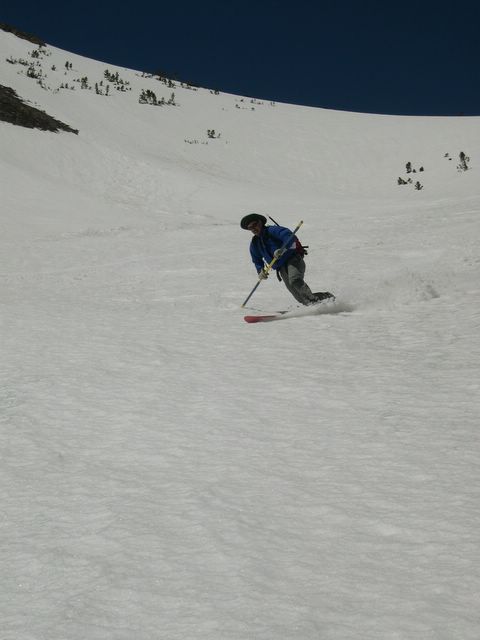
During climb up, I was surprised by how much the 5 weeks off had affected my stamina. After only 4 hours, my legs were exhausted and my lungs were gasping for air. By the time we made it to the top of the Old Man Bowl at 11:30, it had already softened up quite a bit. We stopped when I started sinking in up to my knees with every step. The run down was awesome though. This was my first time skiing corn and it was wonderful. The base was hard with a nice soft top layer. I cranked big GS turns all the way down. As much as I wanted to stop and savour the run, I was having too much fun to stop.
Once we made it to the base of the bowl (~1130), we had a decision to make. We could either keep skiing or head back to the campsite and start drinking. I'm embarassed to say that we were all dead tired and chose option B. We were back at Tobacco Flats drinking cans of PBR by noon. The other group didn't arrive back at the site until 4 pm. They ended up making it up to the top of Aggie and doing several laps on the Hippie Chutes. They reported that the snow on the Hippie Chutes was still excellent as late as 3:45. After hearing how great their day was, we were looking forward to rallying and skiing the Hippie Chutes on Sunday.
As the afternoon went on, more and more people started showing up. By the end, we probably had about 25-30 people there. It was great to get to know all of these other people who share a passion for backcountry skiing. As a couple of us remarked, the gathering was really a testament the power of the internet. Five years ago this gathering would not have been possible. But thanks to the Teletalk forum on Telemark Tips, a group of strangers coming from everywhere from Seattle to San Diego was able to get together for a weekend of skiing. Most of my friends think it's a bit weird to be driving 7 hours to meet a group of strangers I met over the internet. If I were them, I'd think so too. But let's face it, there aren't that many backcountry skiers in Southern California and the internet allows us to all come together. More importantly, if a person is into backcountry skiing, they might be a bit crazy (aren’t we all?). But deep down, they’re probably a pretty good person.

The last weather forecast we saw before driving up said that it wasn’t supposed to start raining until Sunday afternoon. Unfortunately, I started hearing drops hit my tent around 1:30 AM. By 3:00 AM, those drops had turned into a downpour and heavy winds. Worse for me, I was too lazy when we set up camp Friday night and too drunk on Saturday to put on the rain fly. So I bailed from the tent around 3 when the tent started leaking like a sieve and finished the night in the front seat of Tyler’s car. Needless to say, we didn’t go out skiing on Sunday. So the Hippie Chutes will have to wait until next year.

Monday, April 10, 2006

Ski Report: Mt Baldy and the Rock Ski Theorem

I spent Saturday up at Mt. Baldy skiing with my friends Christina, Dianna, Tyler and Ben. It was a typical Baldy day...sunny (until clouds rolled in around 3pm) and upper 40's. The snow cover was good by Baldy standards, although there were still plenty of rocks and trees sticking out of the snow to keep things interesting. Due to the daily freeze-thaw cycle, we spent the morning skiing the south/southeast facing terrain off of chair 4 (to the left of the base lodge when looking up). It was already nice and soft by 10AM. We moved over to Thunder Mt around noon. Most of the off-piste terrain there was still frozen. But we were surprised to find that the snow on the north facing terrain(just to skiers right of the ridge the chair lift goes up) was still soft and powdery in spots. With this knowledge in hand, we headed over to South Bowl for a couple of runs before lunch. The snow in the north facing section of the bowl (all the way to skiers left) was good but inconsistent. It would alternate from being soft powder to ice topped with death cookies. All in all, it was good skiing that challenged you to adapt to the terrain and deal with it. We took a few more runs , moving further and further to skier's right working our way towards the lift. That side had definitely received more sun and we were able to find some nice untracked soft snow left over from last week's storm.
What left me really excited about Saturday was that it provided me even more reason to believe that there is strong scientific link between using rock skis and being able to ski over rocks without getting core shots. Like the week before, I was skiing where ever and as fast I wanted to, without really caring whether or not I hit a rock. The snow cover was marginally better than the week before, but there were still plenty of rocks to be found. Most of the day I was pretty good about avoiding rocks. But on the last run from the top, I was going full speed under the Thunder Mt lift. What I failed to notice on any of the rides up the lift that day was that towards the end of the slope, there was one spot where the snow stopped and a 5 yard stretch of gravel began. Unfortunately, I didn't see it until 10 yards before the snow stopped and I was going way too fast to be able to stop in time. So I decided to go with it and ski the gravel. I did jump off the snow a little to try to keep my full weight from being on the rocks. But as I was going over, I still heard that painful sound of base material meeting granite. Even though they were rock skis, a little part of me did die at that moment. I decided to wait until I was at the bottom to look at my skis as I'm a firm believer in the saying "igorance is bliss." Amazingly enough though, when I did look at them, there was nothing but a few long (2/3 ski length) scrapes and none of them were core shots. So it appears that either Dynastar is on to something in their choice of base material or there is a scientific link preventing rock skis from getting core shots.
The other interesting part of Saturday was that it was the first time I'd ever skied with little kids(since I was one myself). Ben brought his three sons along. The rest of us skied with Ben's two oldest sons, Andy (12) and Jake(9), while Ben skied with his youngest son Danny. I was amazed how good Andy and Jake were. Perhaps they weren't quite as good as the phenom kids who make it into the Warren Miller movies. But we took them down steep terrain that in places had really crappy snow. They didn't flinch for a minute and there was never any bitching. They were awesome. Before this I had always thought that it must be tough for a parent to have to give up skiing good terrain to spend years sticking to intermediate terrain teaching their kids to ski. But Saturday made me realize that it must be a great feeling when you finally see your kids become great skiers and develop the love for the sport that you have. The only thing that sucks is that Ben has a really narrow window to enjoy skiing with his sons because within 5-10 years they'll be good enough where they won't want to wait for dad anymore.

Tuesday, April 04, 2006

The Cougar, The Local, and The Liftie

No, isn't a C.S. Lewis knock off. I actually came across this article in Powder Magazine which touches on the Hardcore Skier Chick topic from February. Thing of it as a how to guide for the single guy to navigate through the ski town singles scene. Enjoy!

http://powdermag.com/features/columns/radar-love/

Sunday, April 02, 2006

Ski Report: Sunday at Baldy

Today was my first day this year at Mt. Baldy. Before moving to San Diego last spring, I skied there twice last year over President's Day weekend while I was out here apartment hunting. I was treated to 3 feet of powder both days. I was told that I was spoiled and will never see conditions like that again. I haven't. But ever since then, I've been waiting to go back.

So today I finally made it. I got there around 9. The groomers had already softened up a bit, but all of the off-piste stuff was rock hard. I found a couple of strategies to make the morning off-piste experience more enjoyable. First, try to ski where others haven't gone (i.e. no tracks) yet. Even if its rock hard, you just dig in your edges and it’s just like skiing an eastern groomer. Second, try to challenge yourself by seeking out the worst conditions on the mountain. I’m dead serious! What I mean by this is that you should look for the worst combination of death cookies, rocks, trees and anything else that may be sticking out of the snow. Then you attack it and see who wins. I like to think that if it doesn't kill you, it only makes you a better skier. After a few runs of that, plain death cookies are absolute joy.
On their website, Baldy is reporting a 12-30" base. Although coverage on most of the mountain was surprisingly good, there were numerous places where that 12" was looking awfully generous. In the thinner areas, it was definitely more like 2" of snow intermixed with gravel and pine needles. Unlike my trip to Snowbird in December, I actually used foresight and brought my rock skis...a pair 193 Dynastar Max Zero's. For Baldy, this was the right choice and I would never recommend bringing your good skis there unless it was a year like last year. I don't how you are, but when I'm on my good skis and I really hit a rock and hear that scraping that screams "Core Shot!!!”, a little piece of me dies. But if you're on rock skis, it doesn't matter...they're just rock skis!. Just after lunch, I took a run off the chair to the left as you're looking up from the lodge. On the way down, I got to a section where there were interconnected 3 foot wide snow-covered bushes surround by gravel. With my Atomic MeX’s (my good skis) I would have run like a baby. But on my rock skis, I charged it, picked my way down with jump turns and had a great time doing it. The other great thing about rock skis is their tie in with Murphy's Law. Murphy's Law dictates that if you have new skis, every rock you hit will give you a core shot. But with rock skis, it says that you can purposely ski down gravel without getting a core shot. Sure enough, when I looked at my bases at the end of the day, even with a very sketchy thinely covered run down to the parking lot, they had nothing but minor scrapes.

The last part of today's Baldy rant has to do with high fashion. Baldy is the only place where I, dressed in a 5 year old red Patagonia shell and plain black Marmot bibs, feel like the pinnacle of fashion. It’s an old school mountain and people like to dress the part. I love the fact that you see one-piece suits (never thought I'd ever say that!!), old Descente ski sweaters, stretch pants accompanied by jester hats (always wanted one in junior high), and a woman sporting a white unitard. You got to love it! Oh yeah, one more thing, if you need any other reason to go up there, there was a dude on a hot pink Tua Monoski!

Saturday, April 01, 2006

Mushy Longboard Waves and Riding Giants

Since I wasn't in Mammoth enjoying 16" of the Sierra's finest, I felt compelled to make my way down to Tourmaline (San Diego) to catch some waves this morning. I was pleasantly surprised. It was great longboard conditions...3 foot waves which which you could seemingly ride forever. While not nearly as good as skiing powder or skiing steep chutes, catching a good wave is pretty damn nice!

Speaking of surfing, I just recently saw the movie "Riding Giants." It's a documentary covering the history of big wave surfing. As much as I love Warren Miller, it puts any ski porn that I've seen to shame as far as quality. Besides just being a great story, what struck me about the movie was how similar the big wave surfer ethos is to skiing.

Like the ski mountaineers who continually push the limits on first descents, the pioneers of big wave surfing did the same with 30 foot walls of water. Some lost their lives, others like Mike Stang in Waimea Bay became legends. Similar to the best mountain guides, they were experts in their environment. They knew where every break was and how the weather would affect it. When their boards were limiting them, they experimented with new designs and materials that would allow them to surf still bigger waves. Also like skiing, in the beginning, there were few women out there. The waves were the love of their life. Similar to Alta Gold powder, it was an addiction that kept them come back and back for more. It was their life.

Riding Giants continues on to the 1969 "Swell of the Century" (similar to weather channel "Storm of the Century" references???) that hit Hawaii. Big wave surfing legend Greg Nolan attempted to surf and was completely annhilated by it. Like the best ski moments, unfortunately no photos were taken. The moment was too pure to disturb with a camera. Even though he only just made it down the crest of the wave before it crushed him, he described it as being right up with the birth of his first child. In skiing, we says that if you're not falling, you're not trying hard enough. It's the same in surfing. He pushed the limits and he fell...but so what.

The story continues on to the development of the Bonzai Pipeline, the discovery of Maverick's (like the best powder stashes kept secret from the general surfing community for 15 years) in Northern California and Laird Hamilton's introduction of the jet ski to hit bigger waves than previously thought humanly possible. I must compliment the director on his choice to include numerous shots of ex professional volleyball player/supermodel Gabrielle Reese talking about her husband Laird Hamilton. Unlike skiing, surfers do get all the cute women today.

All in all, its an awesome movie. While touching on the history of skiing, Warren Miller's movies are not in the same league as "Riding Giants". I would love to see a serious movie about the evolution of skiing...dealing with everything from the first Austrians in St. Anton to the first single chair lift at Mad River Glenn to some of the first descents in the Chugach today.

Friday, March 31, 2006

No Mammoth This Weekend

Unfortunately, due to not being able to get out of work until 4 this afternoon and the LA posse deciding to leave early for Mammoth, I was going to be stuck making the drive by myself. As much as I love to ski, doing the drive solo just didn't seem worth it. 16 hours of driving round-trip, dealing with both San Diego and LA rush hour traffic, and storm conditions on the way up were too much for me. Maybe I'm just a pussy, but if I went, I foresaw myself being completely exhausted (and in no mood to have any fun) both while up there and after coming home.

Wednesday, March 29, 2006

Gear Review: REI Double Diamond Ski Pack

This is almost a great little ski pack. At 2000 cubic inches, it is biggest enough to take out on most daytours. I was able to carry food, avy equipment, a fleece, hat/gloves, water, skins and a basic first aid kit. With all of those, the pack is completly full. Personally, I prefer to have some extra space in case I need to bring extra clothing or water along. If you haven't noticed it from my other posts, I like to be prepared for any situation that might arise. So when I get another daypack, I plan on getting something slightly larger.
The pack fits great and is very comfortable to wear, both while skiing up and down the mountain. It has an external shovel blade pocket and attachments to hold your shovel handle and/or an ice axe. My favorite feature was the back panel zipper. It was so convenient that I almost never loaded the pack from the top. The pack also comes with a 2 L Nalgene Hydration pack that is integrated into the right shoulder strap.
As good as the pack was, there were several quality issues that were highly disappointing. First, the hose on the Nalgene pack has a fitting which disconnects (by pressing a button) from the bladder. When the pack was full, the hose would disconnect from the bladder about 25% of the time. As you would expect, I found this extremely annoying when to get a drink, I had to stop skiing, take off the pack, open it up and reconnect the hose to the bladder. Next, 2 weeks ago, the connection between the bladder and the hose started leaking and I lost all of my water at the very beginning of a ski tour. REI ended up replacing the Nalgene hydration pack with a Camelback bladder that seems to be better built. (So far, no leakage!) Finally, at the beginning of my tour this past Sunday, one of the connectors for my chest strap ripped off the pack. If you've ever seen me, you know its not because I was overflexing my pythons!

Overall, I can not recommend this pack. For day tours where you are not taking a lot of gear with you, it is a great pack. However, I expected more from REI in terms of quality. You do not want a pack that is going to fall apart on you in the backcountry.

Note: I just returned the pack to REI. True to their reputation, there customer service was excellent and they gave me a full refund when I couldn't find another pack in the store to replace it with. They even let me keep the Camelback hydration bladder/hose.

Tuesday, March 28, 2006

Its Snowing in Mammoth!!!!

....and that's where I'm going to be this weekend! I just finished looking at the latest weather forecast. According to the NWS, they are supposed to be getting upwards of 3 ft of new snow. It sounds like this storm will be wetter than recent ones. The snow level is supposed to be around 8000 ft dropping to 5500 ft later tonight. I won't be getting there until late Friday night. So I'm sure it will be tracked up by Saturday morning. Even so, the skiing should be great.

Monday, March 27, 2006

Backcountry Ski Trip Report: Baden-Powell/9088 Trip Report

I joined up with Dave Puzo (Carlsbad) and Scott Siegrest(Hermosa Beach), whom I met on Telemark Tips, to ski Mt. Baden-Powell this past Sunday. We met up at the Vincent Gulch parking lot parking lot at 7:45. From there we hiked about 1/3 mile along the Angeles Crest highway to the North Gulley(shown by where creek runs down on topo map). The highway is normally just closed in the winter. However, I doubt it will be open at all this summer. At one point, half a lane's worth of the highway (and the supporting ground underneath) has given way and slid down the mountain.


Due to the steep pitch in the gulley and the main bowl, we decided to leave the skins in the car and boot-pack up. However, the snow level in the gulley was far below normal. (We could see the creek running. From what I hear, there is normally 10-15 feet of snow in the creekbed from accumulated snowfall and avalanche runoff.) Since we also decided to leave the rope in the car, we were forced to abondon our plan to hike up the gulley when we got to a sketchy section about 20 minutes in. At that point, we were considering turning back and skinning up the main trail that starts at the parking lot. But as always, once you commit to one course of action, it is difficult to admit defeat and turn back. So we decided to climb the west side of the gulley until we made the ridge and then followed the west ridge up. The climb up the ridge was a bit sketchy. The rock was very crumbly and the mud was fairly loose. Once we started hiking up along the ridge, we wished that we would have brought our skins along. The pitch was low and the snow was deep. The extra 1 lb that the skins weigh seemed like a small price to pay considering we were sinking 1-2 feet into the snow with every step.

Once at the top, we found that the west ridge actually had lead us to the unnamed peak 9088 vice Mt Baden-Powell. We momentarily considered continuing on to Baden-Powell. But after 5 hours of hiking up, we were just too tired. Considering how tough the hike was, the ski down was surprisingly good. We skied the gulley just to the west of the ridge we followed to the top. The top layer (1-2 inches) that wouldn't support us in our ski boots, was more than enough to support us on our skis going down. For the first half, it was almost as if we were skiing a groomer with 2 inches of loose/wet snow on top. About 2/3 of the way down, avalanche debris in the gulley forced us into survival skiing mode. Once past the avalanche debris however, the snow on the last section, although thin and wet, was surprisingly good. We were able to ski all the way to the road.

Recommendations: If you do plan on going up the main north gulley, I recommend that you bring a rope. We wish we would have brought it so we could have proceeded with our orginal plan. In the gulley that we skied, the cover was thin for the bottom third. So this storm coming in Tuesday/Wednesday should help to fill it in. Due to the steep canyon walls and it being an obvious slide path, I would wait a while to ski any of the gulleys. While we were sitting on the top of Burnham eating lunch, Mt Throop caught my eye. It looks to have some nice steep north/northeast facing slopes. They might be worth checking out.

Avalanche Activity: Most of the avalanches we saw were wet slides on west facing slopes. They looked to be several days old and a number had slid all the way to the ground. We experienced some sluffing of the top layer (~2 inches) at a few places. But there was nothing signficant while we were there.

Tuesday, March 21, 2006

Avalanche Safety Course

At the very beginning of this ski season, one of the promises I made to myself was to take an avalanche safety course. Previously, I had done a little backcountry skiing (twice in high school) and had skied quite a bit of powder, but I didn’t have a clue when it came to whether the slope I was on would actually slide. Looking back at some of the things I had done in the past, I knew that I was lucky not to have gotten hurt before.

Back in college, I did the standard semester abroad my junior year. I lucked out and ended up studying in Grenoble, France during the winter of 1999. That turned out to be one of the biggest snow years Europe had in recent years. Consequently, every weekend turned out to be a powder weekend. If you don’t know, there is no such thing as avalanche control in Europe. You go off-piste at your own risk. That winter, we used what we called the “Three-Track” Rule. It stated that if there were three or more tracks going off piste, it could be assumed that any avalanche that could take place, would have already taken place and it must therefore be safe. Not very smart, I know. But we were just reckless college students then.

Even though taking the avalanche safety course was one of my top priorities at the beginning of the season, I kept on putting off taking the course. I never had a sense of urgency. After all, one of the people who I normally skied with was very experienced in the backcountry. I trusted that he knew when it was safe to be out and when it wasn’t. I conveniently ignored the fact that no one else in our group had any significant experience. Furthermore, I bought into the argument that the western Sierra snow pack was more stable and not as prone to avalanches.

Eventually, I decided that these excuses just didn’t hold up to closer scrutiny and demanded that I learn more about avalanche safety. No group should rely solely on one person’s judgment. Each member should have sufficient knowledge to form their own opinions and to contribute to group decisions. If you’re just depending on one person, who is going to back them up when they make a mistake? What would happen if they got hurt? Besides the group responsibility issues, the western Sierra snow pack argument didn’t really hold up either. Two weekends ago we were skiing on 2.5 feet of super dry snow that was more like what you’d find in Utah than the Western Sierras. Despite the fact that we didn’t set off any avalanches, the snow that weekend was definitely susceptible to sliding. Again, nothing happened to us. But sooner or later everyone’s luck runs out. So I finally decided that it was time to give up a weekend of skiing, take an avalanche safety course, and take personal responsibility for my own safety while out in the backcountry. I no longer wanted to rely solely on luck and my friend’s judgment.

So I spent last weekend (Saturday through Monday) taking the Sierra Mountain Center Avalanche Level One course that was being given in Bishop, CA. The course was taught by S.P. Parker. He opened the course off by telling us that the course was not going to give us the one answer. In other words, nothing we were going to learn was going to tell us that a slope was 100% safe. There are simply too many factors that influence whether or not a slope will slide. Instead, the course was designed to teach you the right questions to ask yourself so that you could make an informed decision and minimize the risk of your or your party getting caught in an avalanche.

On the first day, we spent the morning in the classroom discussing case studies, types of avalanches, rescue procedures, how terrain influences the potential for avalanches, and routefinding. The afternoon was spent in the field looking at the actual terrain for signs of avalanche danger and practicing using our beacons. I found this really useful since I had never had much success practicing with my beacon before. (I’ve got an Ortovox M2. While its range is better than the digital beacons, it definitely takes more practice to use it effectively.)

On day two, we again spent the morning in the classroom covering additional case studies, group dynamics (what leads groups to make poor decisions), influence of weather, and snow pack theory. In the afternoon, we drove to Table Mountain and dug snow pits. S.P. showed us how to identify the different layers and to perform tests to determine how well the different layers had bonded to each other. I was surprised when S.P. said that he didn’t dig snow pits very often. He only considers them to be one of many factors that help you to determine what level of avalanche danger exists. He emphasized that other factors such as slope angle, wind loading, weather, sun exposure, terrain triggers, how the snow feels (slabby, soft, crusty, etc) and signs of recent avalanche activity should all help you to form a good picture of the degree of avalanche danger present. You only need to dig a pit when you are still unsure after looking at all these other factors.

Day three was spent in the field near Mammoth Rock. We spent the morning examining the terrain for signs of avalanche danger (recent slide activity, wind loading, slope angle, etc), discussing safe routes, and digging another snow pit. In the afternoon, we got in a short run (8” of excellent fluff with wind-pack in places) before practicing multiple burial (2 –3 people) searches. I found the multiple burial scenario much more challenging. Personally, I had a difficult time with my analog beacon (M-2) picking out where each victim was. I realize that I still need to a lot more practice with this scenario. We also learned that team organization plays a big role in coordinating search efforts to make sure that everyone isn’t converging on the same victim.

So was the course worth the $350? Definitely! You can’t put a price on your life. But like S.P. said in the beginning, it’s not the answer. If you are looking for the definitive safety guarantee, you are better off giving up backcountry skiing and staying at a resort. As an avalanche safety instructor should, S.P. comes off as being very risk averse and prudent. In the course, he would never say that a pitch is completely safe to ski down or skin up. It always felt like the textbook answer was to either go up or down the windblown section with no snow on it. But that is precisely because avalanche safety is not an exact science. It's about minimizing risk intead of eliminating it as well as knowing how much risk you are incuring and being comfortable with that. I do feel that the course gave me the tools to better judge how much risk I am taking on each run. Right now, I know the questions to ask and which factors are most important. The next step is to gain more experience so that I can better weight all of these factors to form a more accurate picture.

Wednesday, March 15, 2006

Lessons Learned from Last Weekend

1. Bring a Repair Kit: A number of articles I've read have said to always bring a repair kit with you when going into the backcountry. I have yet to bring one. But this weekend, my buddy Carl was evidence of wisdom of those articles. On the first day out, the loop at the front and the tail clip of the same skin broke. Luckily, we had some duct tape. But Carl was reduced to attaching his skins to his skis by wrapping the front and back with duct tape. So if I don't want Murphy to strike me, I guess I'll have to be responsible and put together a real repair kit before I go out for another tour.

2. Never Feed Carl Whole Heads of Garlic:
One of the side dishes at dinner Friday night was whole heads of roasted Garlic. Apparently, one of garlic's side effects is bad gas. Carl was farting at a rate of once every 10-15 minutes throughout the entire day Friday. Because Carl was graciously letting Nellie and I break trail, it didn't affect us too much. But at one point Carl told us that he really wished he was in better shape because when he'd fart, he didn't have the energy to speed up and escape the smell. As we were heading back to the car at the end of the day, I let Carl go ahead of me at one point. Sure enough he let one out and I realized what he meant. It smelled like I had just been doused with some sort of garlic mist. I was in awe...not sure whether to be disgusted or to admire Carl for his amazing powers.

Monday, March 13, 2006

Backcountry Ski Trip Report: The Good Snow Karma Continues

They say that good things come to good people. I guess that Carl, Nellie, and I have been doing something right since our good snow karma continued this past weekend. This weekend was perhaps the best skiing I’ve ever had and everything just seemed to work out right.

Our original plans were to head out Friday morning and spend Friday and Saturday night at the Pear Lake Hut in Sequoia National Park. As luck would have it, the Sierras were hit by unusually cold temperatures and heavy snows from last Monday until Sunday. As a measure of just how cold it was, the snow line reached to just inside of the park entrance, or 7,000 ft below the elevation we'd be skiing at. Due to avalanche conditions and a potential lack of visibility, we had already decided to spend the weekend doing day trips instead of heading out to the hut. When we got to the Wolverton parking lot, a ranger told us that Evan, the hut caretaker, had radioed in reporting 3 ft of new snow at the hut. There was no way any of us were up for breaking trail through that much snow. So we were happy with our decision. Plus, with this much good snow, there was no need to go all the way to the hut to get good turns.
So we set off down the trail from Wolverton. The 10" of light fluff covering the skin track told us the day was going to be great. We ended up going to "Alf's", a new area that Nellie had found earlier in the week. Just before we reached the intersection of the Pear Lake and Panther Gap Trails (bottom of the Hump), we broke off to the right heading for the ridge you would see if you were looking back as you were going up the Hump. Within 2 hours of leaving the parking lot, we had reached the top of Alf’s(8600'). Apart from a meadow on the far right portion of the ridge, all of the runs are in the trees. Moving from right to left, the runs get steeper and longer, increasing from 700' to 850' of vertical. As soon as I pointed my skis downhill, I knew that we were in for something special. The snow was thigh deep and super dry...dryer than anything I've every experienced in Utah. We were getting face shots with every turn. I had never experienced anything like this. I've skied lots of powder in my life. But this took the whole floating sensation to another level. It was so light that skiing in it was effortless.
On Saturday, we decided to ski 9975. Overnight, we had gotten another 8" of new snow. To minimize trail breaking, we followed the Pear Lake trail for as long as we could. Eventually, we had to break off. Breaking trail through 2.5' of snow, no matter how light it is, really sucks. But 4 hours after leaving the car, we finally made it to the top. We skied the north facing trees rather than the main bowl. The skiing there was even better than Alf’s. The snow was deeper and the runs were longer (900' vertical). In this case, the face shots were big enough to blind you momentarily. Luckily, the Sequoias are widely spaced and the woods are fairly clean. For Nellie and Carl (both telemarkers), the biggest surprise was that they now had to focus on when to breathe. They were getting so low in their turns that the snow would choke them if they breathed at the wrong time. We got in 3 runs on 9975 before darkness and aching thighs forced us to head out. I’d like to give a big thanks to the snowshoers who broke trail heading towards Panther Gap earlier that day. They saved us a good half hour on our trip back to the car.
On Sunday, we again skied Alf's. There was only 3" of new snow overnight. But the snow we got Friday night and Saturday had pretty much filled in our old tracks. The snow was still very good, but it had settled a bit since Friday and didn't seem quite as deep. It very well could have been just as good as Friday. But the previous 2 days, especially Saturday, had completely altered my inner sense of what constituted great powder. Runs we skied included Huck Me, Humpy’s, Tweaker, and The Bean. We got 4 runs in on Alf’s before we decided to head out.
As luck would have it, we ran into Chris (Nellie’s girlfriend) on the trail on our way out. She was coming back from some cross country skiing with a friend. Being the saint she is, Chris volunteered to run shuttle for us to allow us take a run down to Lodgepole. The run to Lodgepole is about 850’ of vertical. The first pitch was short and the trees were tight. I didn’t really get into a good rhythm. The entrance to the second pitch was a bit sketchy. There was still quite a bit of scrub brush to ski around. But after the first 15 yards, it was wonderful. There was enough snow to cover up all of the fallen trees and rocks that normally cover the pitch. Now you could just ski over them without having to worry about breaking you leg. The trees were a little bigger than at 9975 or Alf’s. Consequently it seemed that it was wider open under the canopy. I took advantage of that and just made big powder turns all the way down, enjoying my last face shots of the weekend.

All in all, it was perhaps the best weekend of skiing I’ve ever had. From the first face shot on Friday to our sweet Lodgepole run at the end of the day on Sunday, everything just seemed to go right.

Wednesday, March 08, 2006

What Boots to Use: Alpine vs. AT

I just took up backcountry skiing this season. When I was buying my equipment, I really didn't ponder the question of whether to use my alpine boots (Solomon X-Screams) or to buy a pair of AT specific boots. With all the climbing involved, I knew that I wanted boots that were much lighter than my alpine boots.

I've realized that for most people, the question of what type of boot to use is not so clear. A number friends who have been talking about taking up AT have said they want to use their downhill boots. They figure that if they are going to expend so much energy going up a mountain, they don't want to be limited by their boots while going down.

I can understand where they're coming from. If I had asked that question in January (after my first time out with my new Garmont G-Rides), I probably would have said that alpine boots were the way to go. My trip to Sequoia over MLK weekend was my first time out in those boots. Going up hill in them great. They were warm, fit well, and I really liked how much the boot flexed in the walk mode. However, going downhill those first few times was a completely different story. I was used to big, stiff boots. So after I pointed my skis downhill and my AT boots started flexing like crazy, I didn't know what to do. I was either too far forward or too far back on my skis and the skis just didn't want to turn (or at least not when I wanted them to). I fell as many times that first day as I normally do in a year. So at the end of that first day, I was asking myself if I made a mistake buying AT boots.

But since that first day, the boots have really grown on me. Just because the boots are softer does not mean that you can't ski aggressive terrain with them. It just requires you to be softer and subtler in initiating your turns. You have to pay more attention to staying centered on your skis rather than leaning forward. When I used to hear people say that you don’t need stiff boots to ski powder, I never really believed them. After all, I had stiff boots and they were great in powder. But I understand what they mean now.

Getting back to the original question about whether to even buy AT boots, I see a couple of big questions that need to go into the decision. First, how far do you have to skin before you can ski downhill? If you have to skin for 2 hours before you even begin going uphill, the lighter AT boots are hands-down better. On the other hand, if the parking lot is at the base of the mountain, then the added comfort of AT boots going uphill wouldn't be so important. Secondly, how steep of terrain are you talking about skiing? The way I see it, unless you're going to be hucking big 30 footers, a good pair of high performance AT boots (like the G-Rides) should be able to handle anything. I've skied a couple of 35-degree chutes with them and they were great. So like all complicated questions, I guess it depends. But I'm plenty happy with my G-Rides.

If you have an opinion on this subject, I’d love to hear what you have to say.

Note: If you do end up buying AT boots, contrary to what I did, I'd recommend taking them out for a few days of lift serviced skiing before heading out into the backcountry. There will be an adjustment period. The last place you want to go through that painful adjustment is on a beautiful powder filled bowl that you just spent 2 hours climbing up.

Wednesday, March 01, 2006

Backcountry Ski Trip Report: Pear Lake Hut

I had my first Pear Lake Hut experience this past weekend. As I promised everyone who I went there with, I'm going to start off by saying that it was a terrible place, with terrible snow, and 2 terrible caretakers who will stop at nothing to make your stay there miserable. So if you don't get the point, DON'T GO TO THE PEAR LAKE HUT! Its not worth the 5 hour slog it takes to get there. Now if you've already decided not go there, please stop reading this article and never again come back to my blog. For those of you who want to hear all the details of my terrible Pear Lake Hut experience, keep reading.


This was my first time out on a backcountry trip that was longer than a day. To be honest, even though it was only a hut trip, I did have some anxiety about it throughout the week. Despite Nellie (see Wolverine man article) having sent out a good packing list, I still really didn't know what I would need. How much food was I going to go through each day? How many changes of clothing would I need? I didn't know. I wasn't sure whether to bring a full-sized backpack or to go with a daypack and attach stuff sacks to it. I decided to go with stuff sack option and packed a ton of food and twice as much clothing as I needed.

We set off from the Wolverton parking lot (at Sequoia National Park) on Friday morning. The weather was great. It was sunny and mid 40's. We followed the Pear Lake Trail up to the top of the hump. I had taken a portion of this trail before to go up to ski 9975. But the trail is much more challenging with a 40 lb pack on your back. From the hump you follow the trail down to Heather Lake and then follow the yellow triangles to the hut.
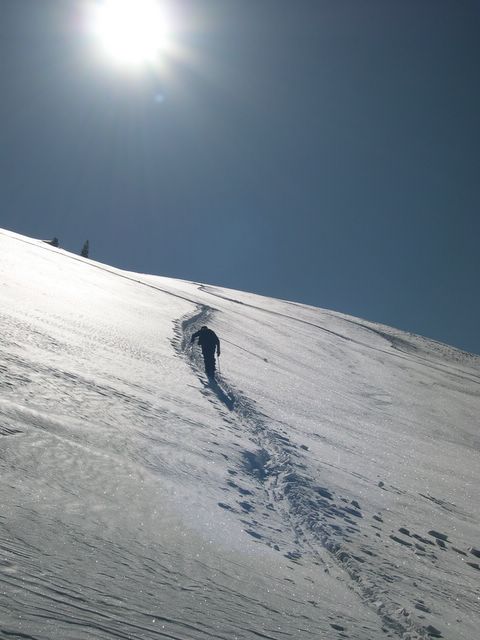
As much as I love skinning and the whole being out in nature thing, I go backcountry skiing so I can get good turns in. So while most of the party kept moving towards the hut, John, Tyler, and I made a short excursion up to the Soccer Fields (Just past Heather Lake and above the trail to the right). It was heavenly. The skin track was already in place. Apart from 2 sets of tracks from the previous group at the hut, we were making fresh tracks all the way down. We had about 8" of nice creamy powder. The runs started out as a wide open low grade bowl (~500' vert) and finished up with about 300' vertical through steeper terrain with some trees and rocks. It wasn't Utah light. But it was pretty damned good. After one run on the Soccer Fields, we left to join up with the others. We were giddy with the knowledge of just how good this weekend was going to be.
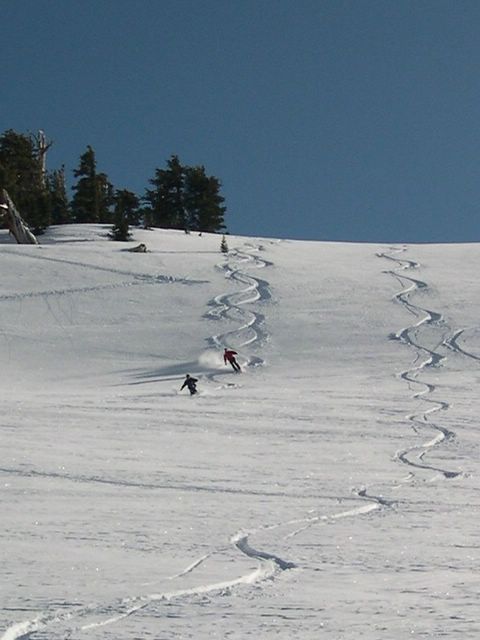
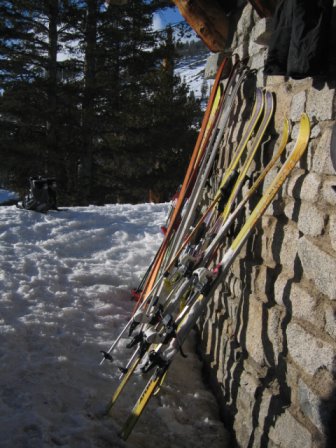
After another hour on the trail, we arrived at the hut. If you're expecting luxury accommodations, you're going to be disappointed. It’s definitely not a luxury condo in Vail. Its basically one big common room that is used for eating, socializing, and sleeping. Besides beds (with mattresses), it’s main amenities are an indoor toilet, a wood pellet stove for heat, solar powered lights to use at night, and two Coleman propane stoves to cook on. For a complete list of what the hut has and what they recommend that you bring, see the website. (http://www.sequoiahistory.org/pearlake/pearlakehutequip.htm).
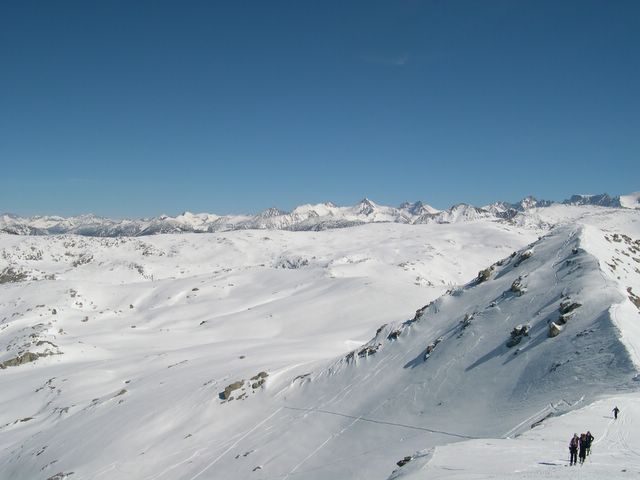
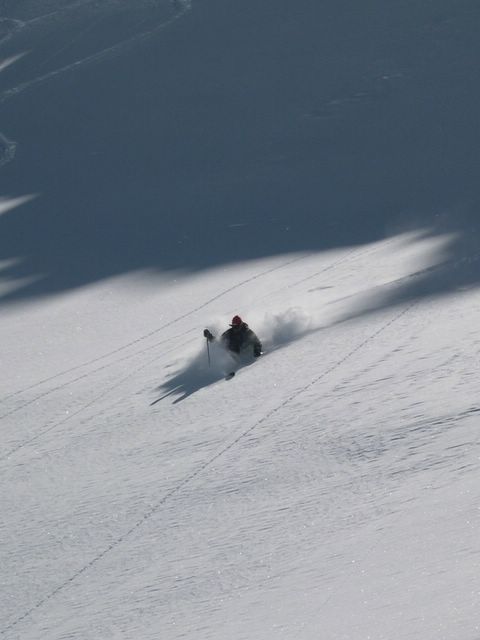
On Saturday, we left the hut at 9 AM to head up to the top of Skier's Alta (north facing portion of Alta peak that you ski from the hut). It was another gorgeous day…sunny and high 30's. It was 2000 vertical feet from the hut to the top of Skier's Alta and it took us 1 hr 45 minutes to make it up. On the way up, Miles, Evan and I were all salivating over some of the chutes that hadn't been skied since the last storm. We settled on skiing the Hourglass Chutes for our first run. It was about 500' vertical and true to its name, it was wide open at the top and bottom with a bottleneck in the middle. I was the 3rd one into the chute. Apart from some wind pack at the top, it was great skiing. From the bottleneck to the bottom, it was steep (30-35 degrees?) with about 8-10" of great, untouched powder. After getting to the bottom and looking up to see our turns, it really did look like a scene out of a heli-skiing video.

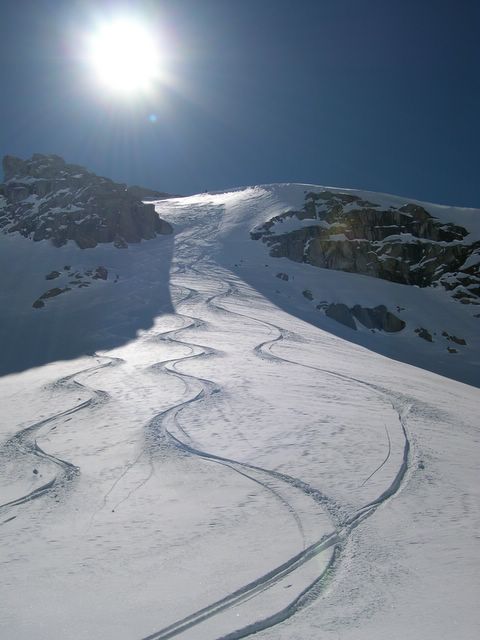
The rest of the way down is composed of two wide-open bowls, one above the other. The first bowl is definitely low grade while the second one is a bit steeper. The snow on both was excellent. After getting to the bottom we stopped for lunch. At that point, John, Nat, and I decided to head on over to Pear Lake and check out Milo's Couloir to see if it was skiable. Unfortunately, when we got to it, we found that due to its more easterly exposure, it had crusted over and wouldn’t be any good.
Just when we were skiing back from the base of the couloir to the lake, I literally fell through a hole in the snow. Everything below my arms had broken through and I was held up by bracing my back and skis against the sides of the hole. Looking down into it, it was at least 10 feet deep below me. Luckily for me, John was still above me when I fell in and was able to pull me out. It was one of the only times in recent memory that I have truly been scared while on skis. If I had fallen in, I would have been there until they could have come back with ropes to pull me out. Thankfully I wasn't by myself that day.

After that adventure, we skinned up a short, more northerly section of the same ridge. Unfortunately Miles and Evan deemed the snow pack to be too slabby to try and ski the main face. So we skied back down to the lake following our skin track. I didn’t see it, but I was told that Nat had a nice collision with a tree on the way down. John and I finished out the day with another run 2/3 of the way up Skier's Alta. It was every bit as good as the first.

Besides great skiing, we also ate and drank well at the hut. When we got back, we found a full vat of River 'Ritas (Beer, lime-aid, and tequila) waiting for us. Earlier in the entry I know I sounded like I was complaining about all the weight we were carrying in. Well, I now admit that it was our own doing. That's what you get when you bring in enough booze (several 12 packs of beers, 2 bags o' wine, and a few bottle of whiskey) and food to insure that despite burning several thousand calories greater than normal per day, you come back 10 lbs heavier. It didn't hurt that all the meals from Chris's heavenly pasta to Kinga and Dave's Rice and Chili were absolutely delicious.
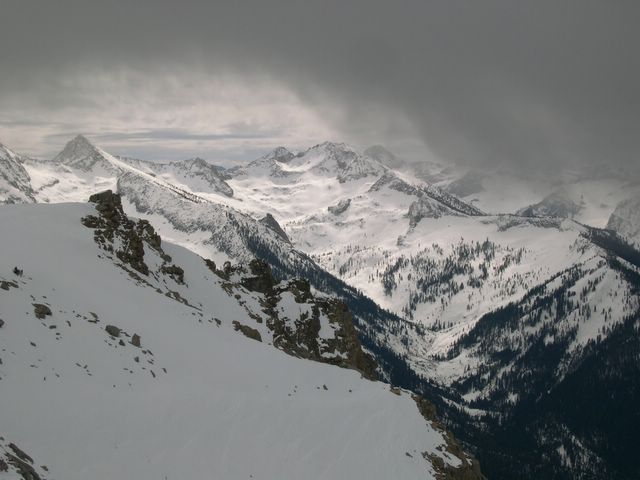
The next morning, Miles, Evan and Alisha left the hut to return to civilization. We still had one more day to rip it up. We set off again for Skier's Alta. This time, I pushed a bit harder and made it up in 1 hr 15 minutes. Sunday definitely wasn't as nice as Saturday. It was overcast and a bit cooler. But the snow was still great. We actually all got a decent sunburn on Saturday. SPF 15 just didn’t do the job. So it was probably for the best that it was cloudy. We spent most of the day hitting various chutes and doing our best to ensure that the next party at the hut wouldn't be able to find any untouched powder. We actually quit skiing around 3:30 that afternoon. I admit that I was the one who said that I didn't want to take another run…although I’m sure that if I had said I wanted to, the others would have resisted. So we went in and treated ourselves to some Gluhwein (hot wine with oranges, cinnamon and cloves). After a few glasses, we decided to go ski another run on the Front Yard (small hill right in front of the hut). I was in such a good mood that I was contemplating taking my headlamp out and going back to the top. Thankfully, I sobered up after a run on the Front Yard and decided that wouldn't be so wise. Instead, we treated ourselves to a round of beacon sniffing. That's where we hide an avalanche beacon and practice finding it using our own beacon. This was my first time using mine (Ortovox M1). It took a while before I remembered how it worked. I realized that I need to practice using it some more.

I must admit that my only regret for the trip was that my friend Carl couldn't make it. The previous Monday, he was the victim of a road rage incident. I'm not sure of all the details. He didn't want to tell me. All, I know is that a crazy Armenian guy (now in the custody of the LAPD) did some serious damage to his face. Despite the fact that Carl wasn't physically there, he was definitely there in spirit. Trying to discourage any of the girls from joining us on the trip, he was kind enough to make them absolutely paranoid that an avalanche was going to kill us all at any moment. Thank you Carl! I found it especially ironic since Carl was the one who told me that the Sierra snow pack is incredibly stable and that you really don’t need to wear an avalanche beacon more than a day after a storm. (Note: I'm by no means advocating that avalanche safety isn't important. He just had them convinced that the hut was as dangerous as a 35 degree slope the day after a 2 foot dump.) Another funny Carl story that came up was his trip into the hut last year with Nellie. Apparently they decided to do a moonlight headlamp trip into the hut on a Friday night. What could go wrong did go wrong. They got lost a few times and it ended up taking them close to 5 hours just to reach the top of the hump. Apparently when they got down to Pear Lake (~5 AM), Carl was delirious (from lack of sleep) and didn’t see where Nellie went when he was crossing Heather Lake. What he missed was that fact that Nellie avoided a weak spot in the ice. So when Carl went, he fell in up to his knees. It’s pretty funny now. But I’m sure Carl didn’t find it so funny back then. Enough with Carl and on to the rest of our story.

The next morning when we woke up it was raining. Yes...raining. The day before, we had heard that a storm was coming in and the snowline was supposed to be 8,000 ft. With the hut being at 9,200 ft, we thought we'd be fine. Despite the fact that it briefly shifted to snow after we left the hut, most of our descent was through the rain. It took us about 1.5 hours to make it back to the top of the hump and another hour to make it down. Once we got to where the Pear Lake Trail me the Panther Gap trail, I was amazed by how much the snow had melted. Countless rocks and logs that were once snow covered, now blocked the trail. The moss on the trees was now a bright green. It looked as if spring was on its way. All in all, my first Pear Lake trip was another great ski experience. I look for to joining Chris, Nellie, Tyler, Dianna, Dave, King, Miles, and Nat again next year. Lastly a big congrats to all the girls who joined us on the trip. Despite Carl's best efforts, they were real troopers and did great. In my book, they have all earned the right to assume the title, "hardcore skier chick."
Note: If you didn't already realize it from everything that followed the opening paragraph, the Pear Lake Hut is not in fact a terrible place. I just promised everyone that I would spread some negative press about it to keep it from getting too popular.